Tokio, Godzilla, Kioto y templos

Tokio, Godzilla, Kioto y templos
— David Eugene Perry

27 de septiembre de 2026: Hoy: ¡Atracamos en Tokio y tren a Kioto!

Desembarcamos del barco en uno de los desembarques más fáciles, si no el más fácil, que hemos tenido nunca. Tan temprano, de hecho, que podemos adelantar nuestra reserva de Uber. Diez minutos después estamos en un taxi precioso e impecable, camino a toda velocidad hacia la estación de Tokio.

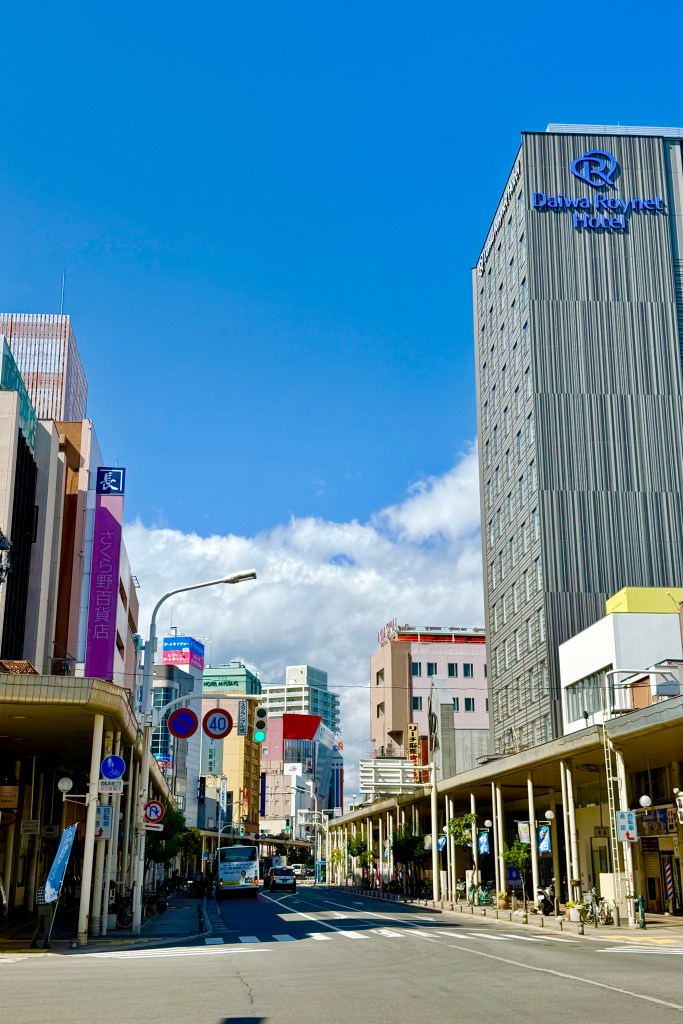
Lo primero que notamos es que, como dice Alfredo, nos recuerda a nuestra primera vez en China: simplemente impecable, aunque por supuesto el centro de Shanghái y Pekín es perfecto, pero no como esto. No vemos basura ni grafitis. Todo el mundo habla bajo y es educado. Y cuando llegamos a la enorme estación de tren, la gente incluso se acerca espontáneamente para ofrecernos ayuda. Los japoneses que hablan inglés —aunque parecen ser relativamente pocos— nos ofrecen información de manera cordial y sin que se la pidamos, entre ellos una adolescente que estudia inglés y está encantada de poder practicar con nosotros.

La estación de Tokio es impresionante: una fachada clásica combinada con una ampliación contemporánea. El hermano de Alfredo nos había advertido: preparaos, es inmensa y una de las estaciones de tren con más tráfico del mundo. Al igual que las calles de fuera, no hay ni rastro de suciedad, grafitis o basura.

Decidimos pasear un poco una vez que averiguamos dónde está nuestra puerta, saliendo al exterior para disfrutar del tiempo nublado pero fresco y, sencillamente, observar a la gente.

Primeras impresiones de Tokio: estoy impresionado.

Me encuentro pensando en lo extraordinario que resulta que Tokio tenga el aspecto que tiene y funcione como funciona teniendo en cuenta la cantidad de veces que la ciudad prácticamente ha tenido que reinventarse. Edo quedó devastada por el Gran Incendio de Meireki en 1657; Tokio volvió a quedar destrozada por el Gran Terremoto de Kantō de 1923; y después enormes extensiones de la ciudad fueron arrasadas por los bombardeos incendiarios estadounidenses durante la Segunda Guerra Mundial, en particular durante el catastrófico ataque de la noche del 9 al 10 de marzo de 1945. Si a esto añadimos siglos de incendios y desastres menores, parece que la reconstrucción estuviera entretejida en el propio ADN de Tokio.

Por supuesto, como fan de Godzilla de toda la vida, no puedo resistirme a añadir a la lista toda la destrucción ficticia. Godzilla ha pisoteado, arrasado y destruido de todas las maneras imaginables grandes partes de Tokio repetidamente desde su primera aparición en 1954 y, sin embargo, de alguna manera la ciudad siempre vuelve a resurgir con mejor aspecto que nunca. Godzilla siempre me ha fascinado, y estar aquí hace que las películas parezcan un poquito más tangibles. Hay algo peculiarmente apropiado en que un monstruo nacido de las ansiedades del Japón de posguerra ataque una y otra vez una ciudad que, en la vida real, también ha resurgido repetidamente de la destrucción.

Pasamos las dos horas de espera tomando un whisky japonés y comprando cajas de bento para almorzar en el tren. Los quioscos que las venden son numerosos y maravillosamente variados, tanto junto al andén como en el propio andén, además de cerveza, aperitivos y, por supuesto, sake.

El tren llega exactamente a su hora y enseguida estamos camino de Kioto. Nuestros almuerzos bento son obras de arte, como si los hubiera diseñado un escaparatista de una boutique de lujo. Cada pieza del sushi de Alfredo viene envuelta en una hoja y mi katsu parece digno de una sesión fotográfica —y, ah sí: delicioso—. Como nosotros, la mujer sentada enfrente lleva dos pequeños «compañeros de viaje»: unas muñequitas que fotografía posando contra el respaldo de su asiento. Como nosotros viajamos con un dúo de peluches formado por el monstruo del lago Ness y un mapache, supongo que no somos los únicos locos.

A nuestra derecha, aunque oculto por las nubes, está el monte Fuji. Está clasificado como volcán activo y su última erupción tuvo lugar entre 1707 y 1708. Japón cuenta con 111 volcanes activos, según la Agencia Meteorológica de Japón. «Activo» significa que han entrado en erupción en aproximadamente los últimos 10.000 años o que actualmente muestran una actividad fumarólica significativa. Eso supone alrededor del 7 % de los aproximadamente 1.500 volcanes activos del mundo, algo extraordinario para un país del tamaño de Japón. La Agencia Meteorológica vigila especialmente y de manera continua 50 de esos 111 volcanes.

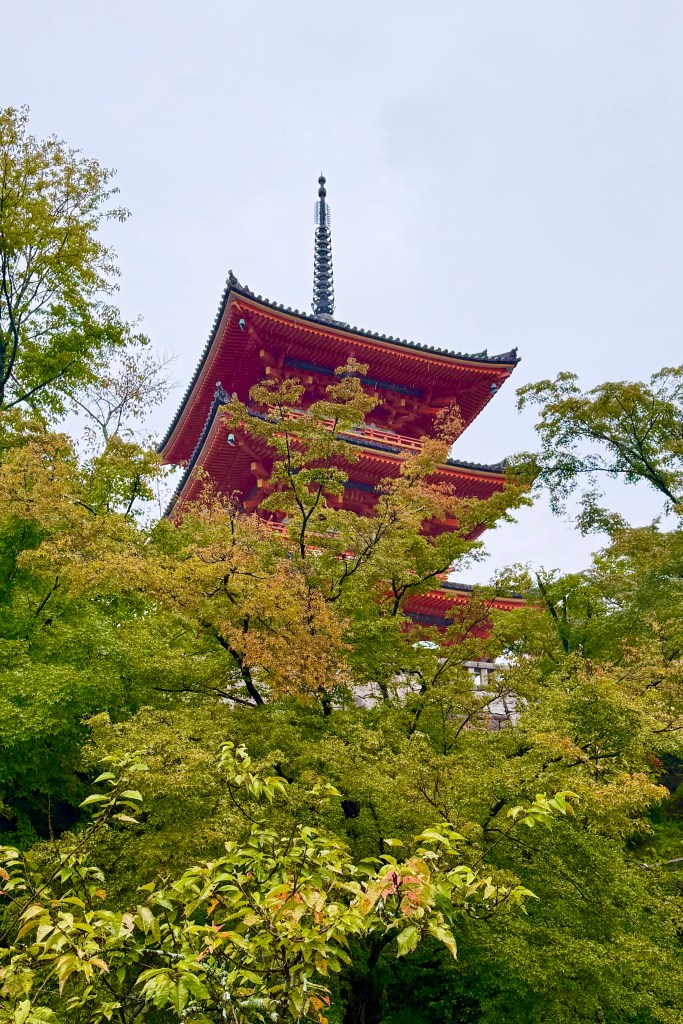
Llegamos a un Kioto frío y lluvioso. Al parecer, el tifón que se encuentra más al sur está afectando al tiempo y esperamos tres días «atmosféricos». Aun así, nos registramos en nuestro hotel, el encantador y céntrico Hilton Garden Inn Kyoto Shijo Karasuma, e inmediatamente salimos hacia el complejo de templos de Kiyomizu-dera.

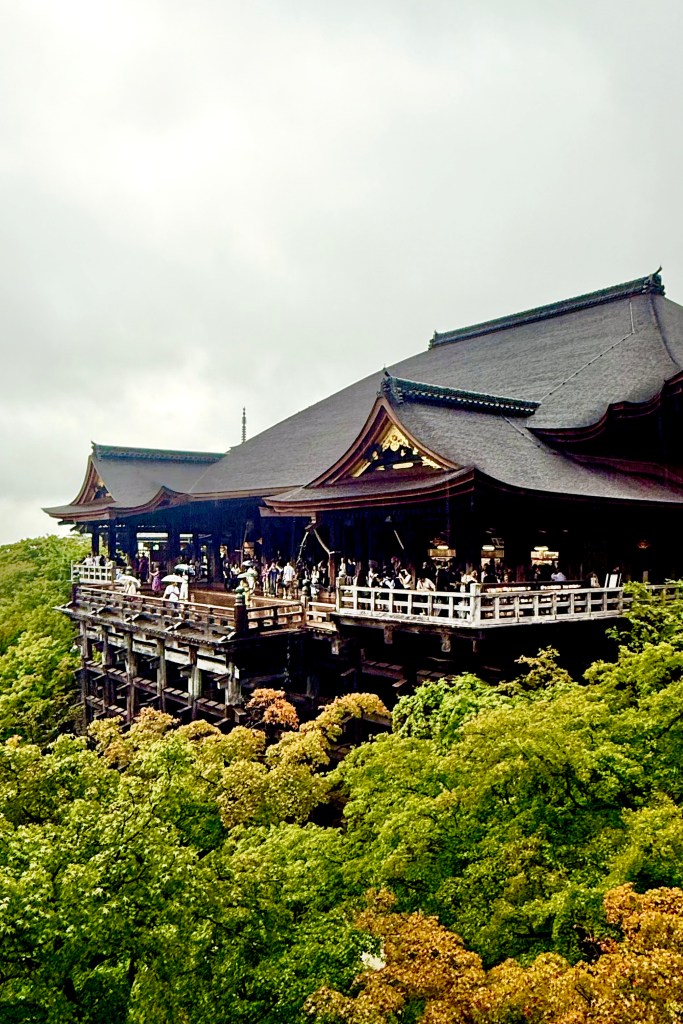
Un taxi nos lleva hasta las colinas del este de Kioto, donde se encuentra uno de los complejos de templos budistas más célebres de la ciudad. A pesar de la lluvia, el lugar está abarrotado. Kiyomizu-dera fue fundado en el año 778 en torno al manantial de la cascada Otowa. Los incendios lo destruyeron una y otra vez a lo largo de los siglos, por lo que la mayor parte de lo que vemos hoy corresponde a una reconstrucción de 1633. Su famosa plataforma de madera sobresale de la ladera. A unos 13 metros sobre la pendiente. Sostenida por una estructura de madera entrelazada sin clavos. Desde aquí normalmente se contempla la ciudad extendiéndose a nuestros pies, pero hoy las cortinas de lluvia y la niebla suavizan el paisaje.

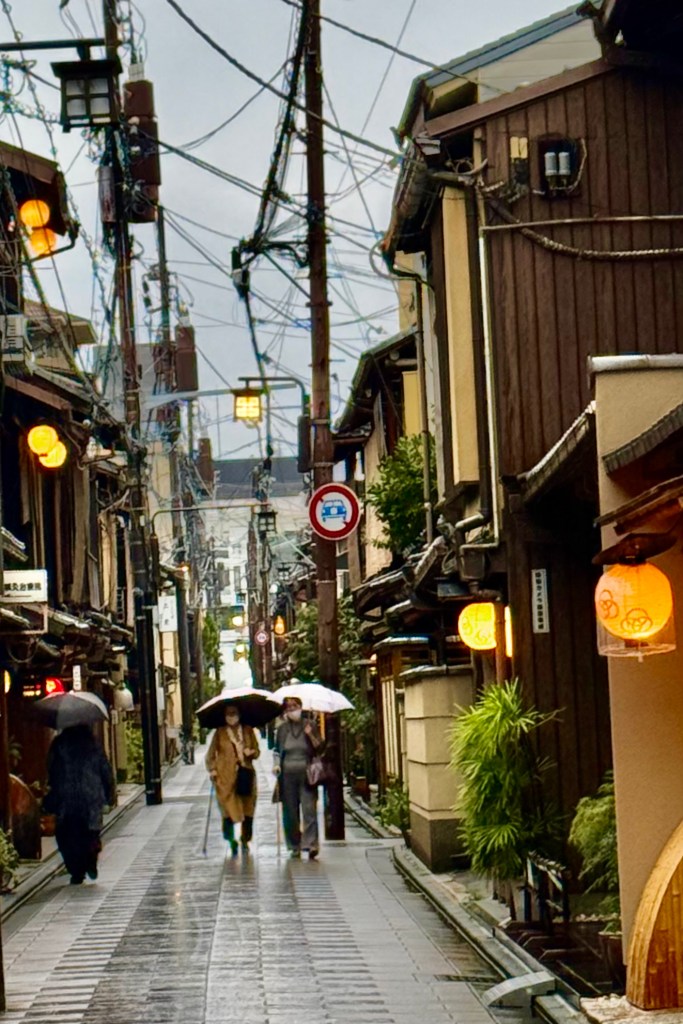
Después de recorrer el complejo, comenzamos a bajar por Sannenzaka y Ninenzaka. Antiguas calles de acceso que durante siglos han conducido a los peregrinos hasta este templo. Hace mucho tiempo que a esos peregrinos se sumaron oleadas de turistas, y hoy las estrechas calles empedradas están abarrotadas de casas de té, tiendas de dulces, cerámica y todos los recuerdos imaginables, muchos de ellos instalados en tradicionales casas de madera de Kioto. Al doblar una esquina, la pagoda Yasaka aparece de repente sobre los antiguos tejados, una de las vistas clásicas del histórico barrio de Higashiyama, aún más evocadora con la tormenta que se acerca.

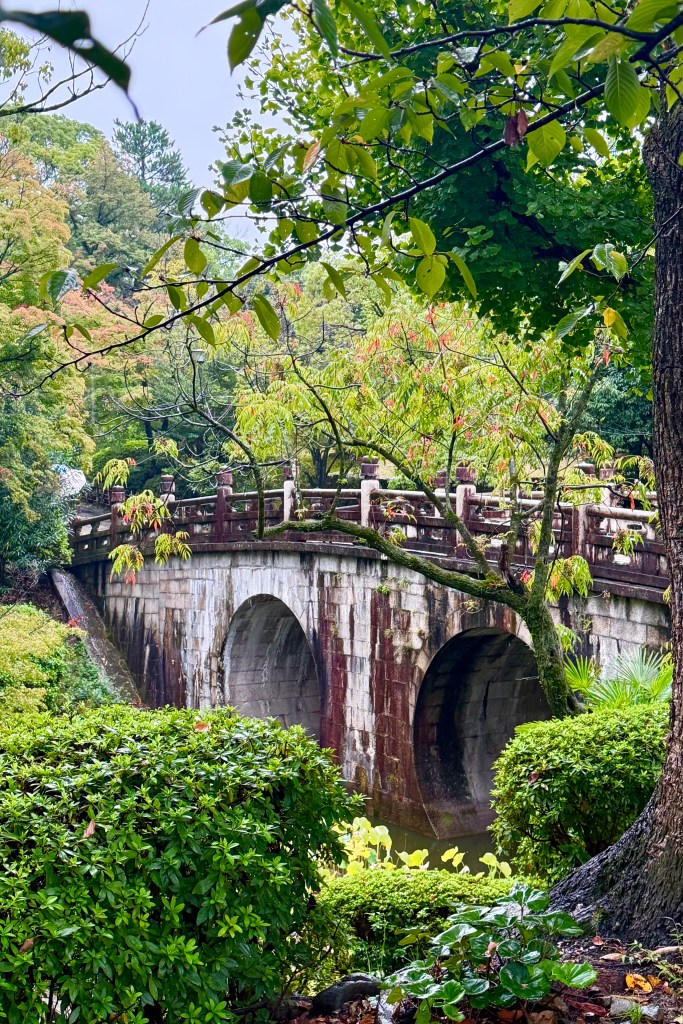
Regresamos caminando hasta nuestro hotel, un trayecto de aproximadamente una hora, utilizando los paraguas constantemente. Paseamos por algunos maravillosos barrios residenciales antiguos de Kioto. Y decidimos echar un vistazo al pub irlandés que está al lado de nuestro hotel.

Por desgracia y para nuestra sorpresa —y disgusto— todavía se permite fumar, y el local está cubierto por una nauseabunda nube de humo. La encantadora mujer que está detrás de la barra nos dice: «Ah, la zona de no fumadores está allí». Pero, claro, una «zona de no fumadores» dentro de un bar lleno de humo no tiene demasiado sentido. Así que, aunque para nosotros un pub irlandés es algo así como el símbolo internacional de bienvenida, decidimos regresar a nuestro encantador Hilton, libre de humo, tomar una copa y después decidir qué vamos a hacer para cenar.

Tengo ramen en mente.

Y, de nuevo: después de tres trayectos en taxi hoy, un tren de alta velocidad desde Tokio y ahora 10.000 pasos atravesando numerosos y muy distintos barrios: ni UN SOLO trozo de basura en el suelo.
Boo2Bullying

Boo2Bullying 4th Annual “Kick Bullying to the Curb” October 10

MEDIA CONTACT
David Perry & Associates, Inc.
David Perry / (415) 676-7007 /
news@davidperry.com

Boo2Bullying Brings Fourth Annual “Kick Bullying to the Curb”
Wellness Festival to Palm Springs October 10

Free family event combines youth wellness resources, live entertainment, family attractions, student recognition and a celebrity kickball game at Palm Springs Power Stadium

Festival: 4-8 p.m.  |  Celebrity Kickball Game: 6 p.m.  |  Admission: Free

25 September 2026 – Palm Springs, CA: On October 10, a baseball stadium will become a field of kindness as Boo2Bullying brings its fourth annual “Kick Bullying to the Curb” Wellness Festival and Celebrity Kickball Game to Palm Springs Power Stadium. The free, family-friendly gathering will connect young people and their families with practical wellness resources while celebrating teamwork, inclusion and the simple but powerful truth that every child deserves to feel safe, valued and heard.

The festival takes place Saturday, October 10 from 4 p.m. to 8 p.m. at Palm Springs Power Stadium, 1901 E. Baristo Road. The Celebrity Kickball Game begins at 6 p.m. and will feature celebrity guests, community leaders, first responders, businesses and local youth organizations in a spirited, family-friendly competition designed to promote kindness, teamwork and community connection.

“A young person who knows they matter is better equipped to speak up, ask for help and stand up for someone else,” said Dimitri Halkidis, founder of Boo2Bullying. “This festival takes that message beyond the classroom and puts it into action across the entire community. We want every child who walks through the gates to leave feeling stronger, more connected and absolutely certain that they are not alone.”


Throughout the afternoon, the festival’s Wellness Village will bring together organizations serving youth and families in mental health, education, healthcare, nutrition, fitness, youth development, digital wellness and community services. The family-friendly celebration will feature music by DJ ACE BOOM, California Mobile Zoo, KONA ICE, face painting by Rainbow Sparkz Circus, interactive youth activities, returning sports announcer Adam Ulhorn and a special performance by the Palm Springs High School Cheer Squad, along with opportunities to connect with local schools, nonprofits, healthcare organizations, youth-serving agencies and community partners.

Teens Off Your Screens™ Recognition Ceremony:

As part of this year’s festival, Boo2Bullying will host a special Teens Off Your Screens™ Recognition Ceremony honoring James Workman Middle School and celebrating students who participated in the initiative’s pilot program. Three student winners will receive special awards recognizing their participation and achievement.

Teens Off Your Screens™, supported in part by a grant from the Irene W. & Guy L. Anderson Children’s Foundation for the 2026-2027 school year, encourages young people to develop healthier relationships with technology, social media and screen time while strengthening real-world connection, creativity and emotional well-being. The initiative is being introduced this fall as part of Boo2Bullying’s ongoing youth outreach programming.

The day’s scheduled highlights include the festival opening at 4 p.m.; the Wellness Village and family activities; music by DJ ACE BOOM; California Mobile Zoo; KONA ICE; face painting by Rainbow Sparkz Circus; a special performance by the Palm Springs High School Cheer Squad; the Teens Off Your Screens™ Recognition Ceremony honoring James Workman Middle School and three student award recipients; and the Celebrity Kickball Game, with returning sports announcer Adam Ulhorn, beginning at 6 p.m. The event continues with a community celebration through 8 p.m.

Since the festival began in 2022, Boo2Bullying reports more than 10,000 attendees, 300 volunteers, 150 community partners and representation from more than 50 schools, along with over $250,000 in in-kind support and resources. The organization has empowered more than 25,000 young people through school assemblies, youth leadership programs, educator and parent workshops, community events and family outreach.

Voices from the Community:

“This festival is amazing! So many resources for our family and so much fun for the kids!” — Parent

“I love the energy, the people, and the message. Can’t wait for next year!” — Student

“Our organization connects with so many families. It’s the highlight of our outreach year.”


Boo2Bullying’s current community champions and presenting sponsors include the City of Palm Springs and Bighorn Cares; community partners include Walter Clark Legal Group, Contour Dermatology & Cosmetic Surgery Center, The Bianco Group, Kimpton The Rowan Palm Springs, The Law Offices of Eric A. Rudolph, and Desert Water Agency; youth & community organizations include Boys & Girls Club Palm Springs, First Tee Coachella Valley, Palm Springs High School Cheer Squad, The LGBTQ Community Center of the Desert, Transgender Health & Wellness Center, and Learn4Life; program support includes Irene W. & Guy L. Anderson Children’s Foundation; and media partners include El Informador Del Valle, Coachella Valley Independent, David Perry & Associates, CV Weekly, NBC Palm Springs and Valley Voice Media.

Admission is free. For event details and free registration, visit boo2bullying.org/kick-bullying-to-the-curb.

About Boo2Bullying:

Boo2Bullying is a federally recognized 501(c)(3) nonprofit organization dedicated to empowering youth, building kindness and creating safer schools. Founded in 2011, the organization provides evidence-informed school assemblies, social-emotional learning workshops, youth leadership programs, educator training, parent workshops, community events and family outreach. Boo2Bullying helps young people choose kindness, strengthen emotional resilience, build healthy relationships and become leaders who positively impact their schools and communities. For information about scheduling a program, contact Dimitri Halkidis at (310) 435-8528 or dimitrihalkidis@boo2bullying.org. For more information, visit www.boo2bullying.org.

###

Screenshot

Today in Upon This Rock History: Pope Clement VII dies

Today in Upon This Rock History: Pope Clement VII dies at the Vatican in Rome, born Giulio di Medici (26 May 1478 – 25 September 1534).

A major figure in David Eugene Perry’s award winning mystery thriller “Upon This Rock”, Clement’s papacy was momentous and tumultuous, including a stay in Orvieto at the heart of Perry’s mystery — and the heart of the Protestant Reformation and England’s many-wived Henry VIII.

“An elegant, twisty thriller” (Armistead Maupin) “Upon This Rock” is about to go into its second printing and is currently in screenplay development.

Get your copy of “Upon This Rock” in fine bookstores worldwide, or online at the link below.

https://a.co/d/08aAoS8Q

Screenshot
Screenshot
IMG

Aomori: An Historic Ferry, Nebuta and Clean, Quiet Streets

Aomori: An Historic Ferry, Nebuta and Clean, Quiet Streets

— David Eugene Perry

25 September 2026: Ahoy! Alfredo and I spent the day walking around Aomori, beginning along the waterfront near the preserved Hakkodamaru, the former Seikan railway ferry that once carried passengers, freight and entire railway cars between Honshu and Hokkaido.

Along the waterfront we stopped at signs explaining Aomori’s connection to Marine Day. In 1876, Emperor Meiji departed Aomori aboard the lighthouse tender Meiji-maru, reaching Yokohama four days later. The voyage was commemorated with the establishment of Marine Memorial Day in 1941; in 1996 it became the national holiday now known as Marine Day.

We also passed Shōtoku Park, which commemorates Emperor Meiji’s visits to Aomori in 1876 and 1881. The park has been moved several times as Aomori Port expanded and the Bay Bridge was constructed.

From there we approached the Hakkodamaruitself, first seeing the ship across the harbor and then the surviving railway tracks leading directly toward its stern. Inside, the museum preserves exhibits on the old Seikan ferry service, including models of earlier vessels and displays showing how passengers traveled aboard them.

One of the most sobering exhibits concerned the Tōya Maru disaster of September 26, 1954. When Typhoon No. 15 struck northern Japan, five Seikan ferries sank, including Tōya Maru. About 1,430 people were killed. The disaster accelerated the push to build a fixed connection beneath the Tsugaru Strait, eventually resulting in the Seikan Tunnel, which opened in 1988.

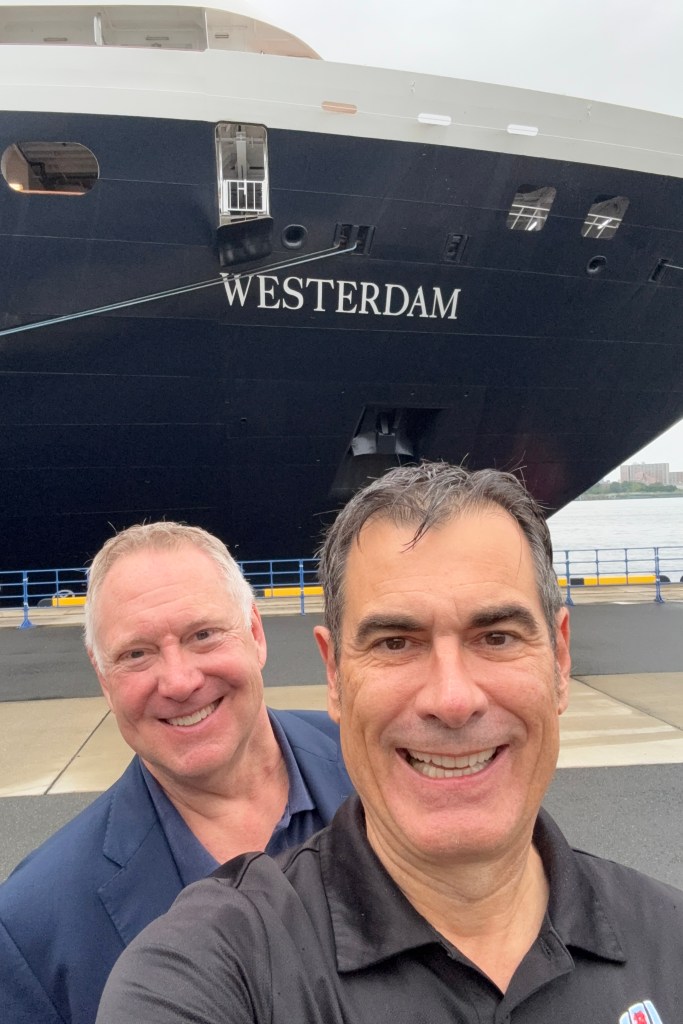
We continued through the preserved passenger areas, the bridge, and the engine room. A display on the bridge showed cruise ships that called at Aomori in 2019, including Westerdam, our own ship. From the bridge we could look across the harbor and see Westerdam itself.

Below decks, the old railway tracks remain in place where trains once rolled directly aboard the ferry. Today part of that space is also used for art installations, including contemporary works using Nebuta techniques and illuminated paper forms.

After leaving the ship we went into A-FACTORY, a large waterfront market and food hall specializing in Aomori products. Apples dominate the shelves, along with cider, juices, sweets and other regional specialties.

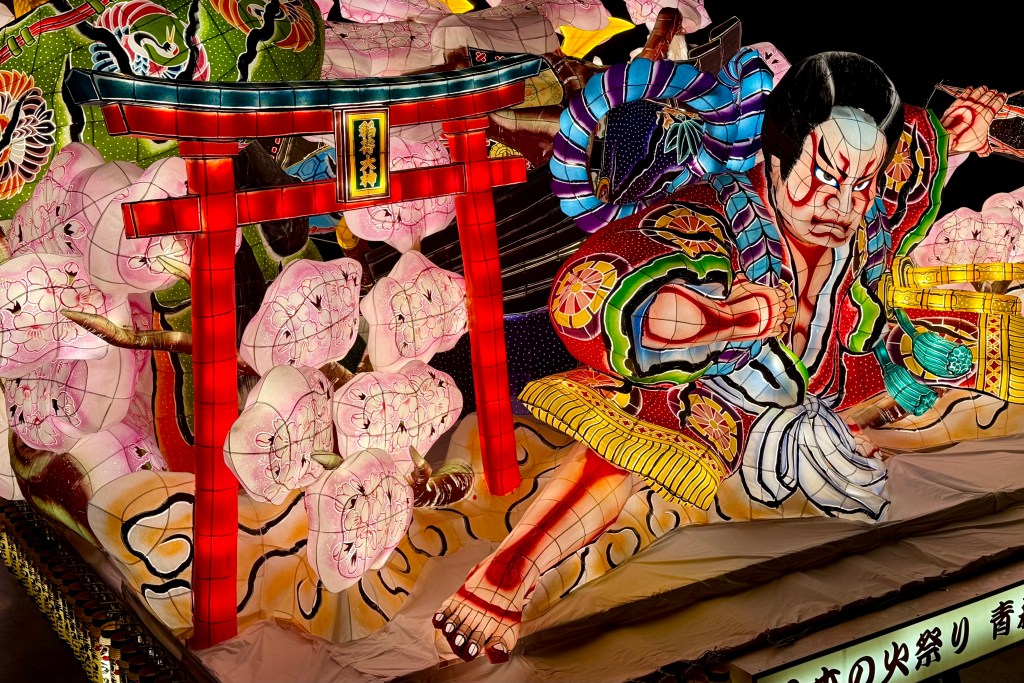
Our next stop was the Nebuta Museum Wa Rasse, devoted to Aomori’s famous Nebuta Festival. Near the entrance were smaller illuminated figures, including a “Welcome to Warasse” display. Inside the main hall were full-size Nebuta floats made of painted paper stretched over internal frames and illuminated from within.

The floats depict warriors, deities, animals and scenes from Japanese legend. One display told the story of Kiyohime, who, after being betrayed by the monk Anchin, transforms into a giant serpent and pursues him to Dōjō-ji Temple. Another section explained how contemporary Nebuta artists reinterpret traditional techniques while keeping the same basic construction of paper, wire, wood and light.

In the gift shop we found something unexpected: JMSDF Ōminato Curry, boxed curry based on recipes associated with ships of the Japan Maritime Self-Defense Force stationed at Ōminato in Aomori Prefecture. Two boxes featured the destroyer Yūdachiand the escort ship Ōyodo.

Leaving the museum, we walked down Shinmachi Shopping Street. We were surprised to see so much of the sidewalk protected by overhead coverings. Given Aomori’s heavy winter snowfall, these covered walkways make more sense as protection from snow and bad weather than from the sun.

We tried several ATMs without success before finally finding one that accepted my card at a Lawson convenience store. Lawson is one of Japan’s major convenience-store chains and a principal competitor to 7-Eleven.

We also stopped briefly in a 7-Eleven, having heard so much about Japanese convenience stores. Along the way we noticed Halloween merchandise in a shop window, one more example of how thoroughly certain Western and American holidays have been absorbed into Japanese retail culture.

One thing that continued to strike us was how quiet and orderly the city felt. The streets and sidewalks were impeccably clean; we literally did not see a piece of trash. At the same time, public trash cans were almost nonexistent. Japan has a strong custom of people carrying their own rubbish until they can dispose of it properly.

Public restrooms were similarly remarkable: whether in museums, parks or other public facilities, every one we used was extraordinarily clean. What we did not often find were paper towels. Many Japanese people carry a small handkerchief or towel for drying their hands.

Mask wearing was also still very common. Japan’s mask culture long predates COVID, with modern widespread use dating back to the 1918 influenza pandemic and later becoming common during flu season and for protection against pollen.

As we continued walking, we repeatedly noticed the distinctive red-and-white steel lattice communications towers that rise above Japanese cities. Their open framework and antenna platforms immediately reminded me of the countless Godzilla films in which such towers seem destined to be knocked down.

While I stopped to photograph one of them, a dragonfly landed on my arm and stayed there long enough for a photograph: a good omen for the rest of our Japanese visit I thought.

We also came across Kaneu Inari Shrine, a small shrine associated with prosperity, commerce and good fortune. Its sign explains that it dates to 1838 and honors Inari deities connected with agriculture, business and wealth.

A little farther along we finally found a pub: Cafe Bar Atom, advertising itself as “American & Irish.” Like the other bars we had passed, however, it was closed. Outside were Guinness signs, American and Irish decorations, Hello Kitty figures and a vintage poster for the Rita Hayworth and Glenn Ford film Affair in Trinidad.

Now, 15,000 steps later we return to the good ship Westerdam. By then we had spent several hours walking through a city where maritime history, modern Japanese culture and Aomori’s own regional identity were all visible within a relatively small area.

Kushiro: Walking with Ainu History and Swimming Deer

Kushiro: Walking with Ainu History and Swimming Deer 

— David Eugene Perry

24 September 2026: Ahoy! Alfredo and I set foot in Japan for the first time in 26 years with a walk about Kushiro on a glorious warm day.

From Westerdam, we took a short 15-minute shuttle ride into central Kushiro, where we set off on foot. Almost immediately, Kushiro gave us one of the more unexpected sights of the trip: an Ezo sika deer swimming across one of the inner-city waterways. A large stag with a handsome rack of antlers, he appeared perfectly healthy and completely untroubled by his aquatic commute.

Later we saw a second deer swimming in the channel. This one appeared to have some sort of netting caught around his antlers. We hoped he wasn’t in distress, but standing there as visitors with no obvious way of contacting the Japanese equivalent of the SPCA, there was little we could do beyond watch and hope he made it safely to shore.

Deer are common throughout this part of Hokkaido and are surprisingly strong swimmers, so seeing one in the water is not necessarily a sign that something is wrong. Still, two swimming deer in one morning in the middle of the city was certainly not something we expected.

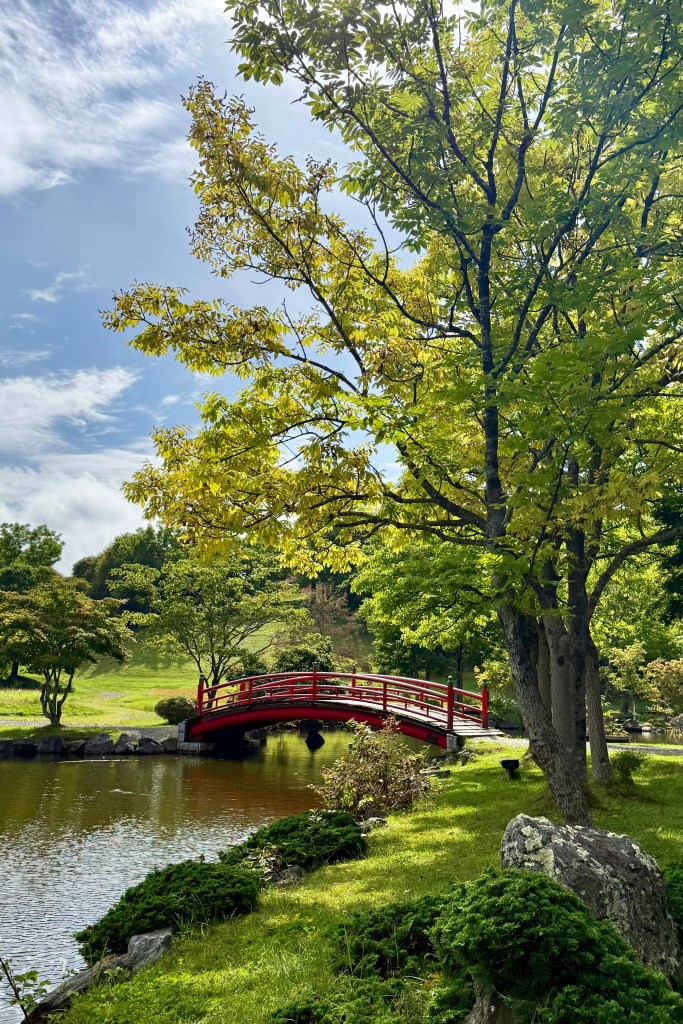
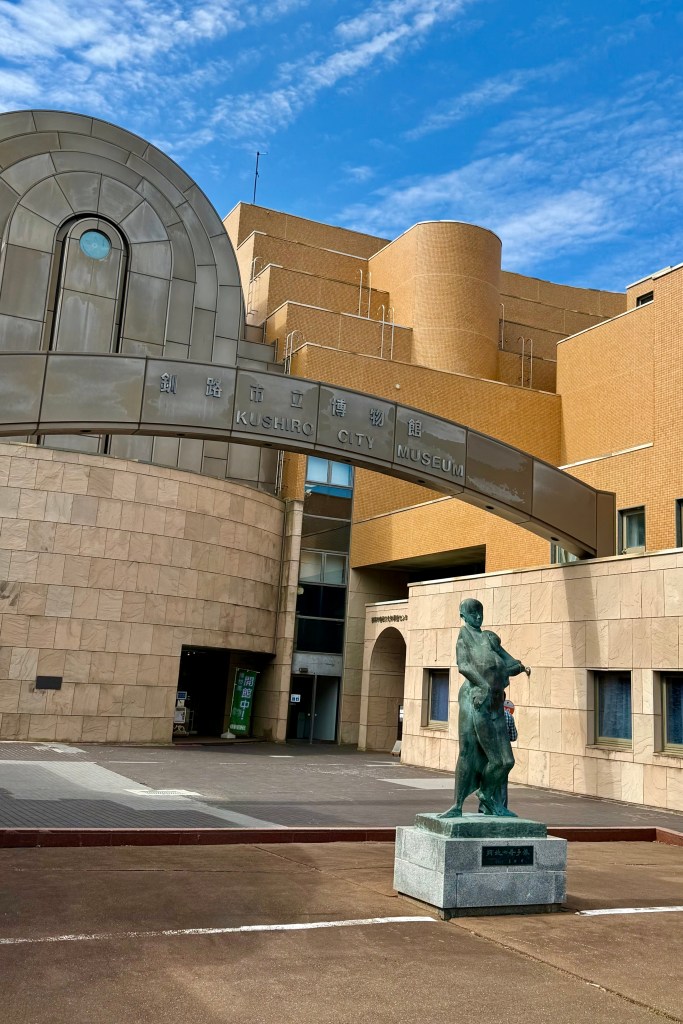
Our walk eventually took us to the Kushiro City Museum, dramatically situated beside Lake Harutori. The museum covers the natural and human history of eastern Hokkaido, including the wildlife of the Kushiro wetlands, archaeology, and the story of the region’s Indigenous Ainu people.

The Ainu exhibits were particularly interesting.

The Ainu are the Indigenous people of northern Japan, with their own language, spiritual traditions, clothing, foodways and culture. Their traditional homeland is most closely associated with Hokkaido, though historically Ainu communities also extended north into Sakhalin and the Kuril Islands.

Their ancestry is closely connected with the ancient Jōmon peoples, hunter-gatherer communities who inhabited the Japanese archipelago for thousands of years. The Jōmon are especially famous for producing some of the world’s earliest known pottery.

Beginning roughly during the first millennium BCE, migrations from the Asian continent brought wet-rice agriculture and what archaeologists call Yayoi culture to much of Japan. Over many centuries, these populations mixed, contributing substantially to the ancestry of today’s Japanese population.

Hokkaido, however, followed a somewhat different path. Rice agriculture did not initially replace hunting, fishing and gathering there in the same way it did farther south. Cultures descended from the Jōmon developed while also trading and interacting with communities around the Sea of Okhotsk and with people farther south in Honshu. From those long and complex interactions emerged the culture we now recognize as Ainu.

The Ainu lived in villages, or kotan, often situated along rivers where fishing, hunting and trade were central to daily life. In the Kushiro region, Ainu communities lived along the Kushiro River and throughout the surrounding wetlands.

The museum’s exhibits explore traditional Ainu hunting and gathering, clothing, food, beliefs, ceremonial objects, transportation and oral traditions. Among the objects associated with Ainu life are distinctive boats built for river and coastal travel, reminders of just how important the waterways of eastern Hokkaido were to transportation and survival.

For much of modern Japanese history, however, Ainu culture was not celebrated.

During Japan’s modernization in the 19th and 20th centuries, government policy emphasized assimilation. Traditional Ainu practices were suppressed or discouraged, land was taken over for Japanese settlement, and the Ainu language declined dramatically.

Public attitudes and official policy began to change gradually, particularly late in the 20th century.

A major step came with the 1997 Ainu Culture Promotion Act, which marked a shift toward preserving and promoting Ainu culture. In 2008, Japan’s Diet formally recognized the Ainu as an Indigenous people. Then, in 2019, a new law gave that recognition statutory force and expanded efforts to support Ainu culture and communities.

Today there is much greater public interest in Ainu history, language, art and traditions, though that recognition is relatively recent compared with the many centuries of Ainu history in Hokkaido.

All of this history came during what was otherwise a very contemporary Japanese walking experience — including our inevitable stop at 7-Eleven.

Anyone whose idea of 7-Eleven comes from the United States is in for a surprise.

In Japan, the ubiquitous konbini is part convenience store, part miniature supermarket, part café and part neighborhood service center. There are remarkably good sandwiches, rice balls, noodles, salads, prepared meals, desserts and coffee, along with ATMs, parcel services, bill payment, ticketing, photocopying and printing.

Japanese convenience stores also benefit from extraordinarily efficient distribution systems. Fresh food is delivered frequently, allowing stores to remain compact while still offering an enormous range of prepared meals and everyday necessities.

The Japanese version of 7-Eleven became so successful that the relationship eventually reversed: the Japanese company that developed the country’s 7-Eleven operation ultimately acquired control of the American business.

What began as an American convenience-store concept was transformed in Japan into something distinctly Japanese.

So our first morning back in Japan after 26 years managed to encompass quite a lot: a sunny waterfront, two swimming deer, thousands of years of Jōmon and Ainu history, a walk across Kushiro, and a reminder that even a trip to 7-Eleven can tell you something about the country you’ve just arrived in.

After our walk and museum visit, we took the short shuttle ride back to Westerdam where alongside the ship had sprung up a small village of local food trucks and trinket vendors. All in all a pleasant day for our first stop back in Nippon.