The Titanic and Memory

Titanic: The Night Lives On
– by David Eugene Perry

Untitled

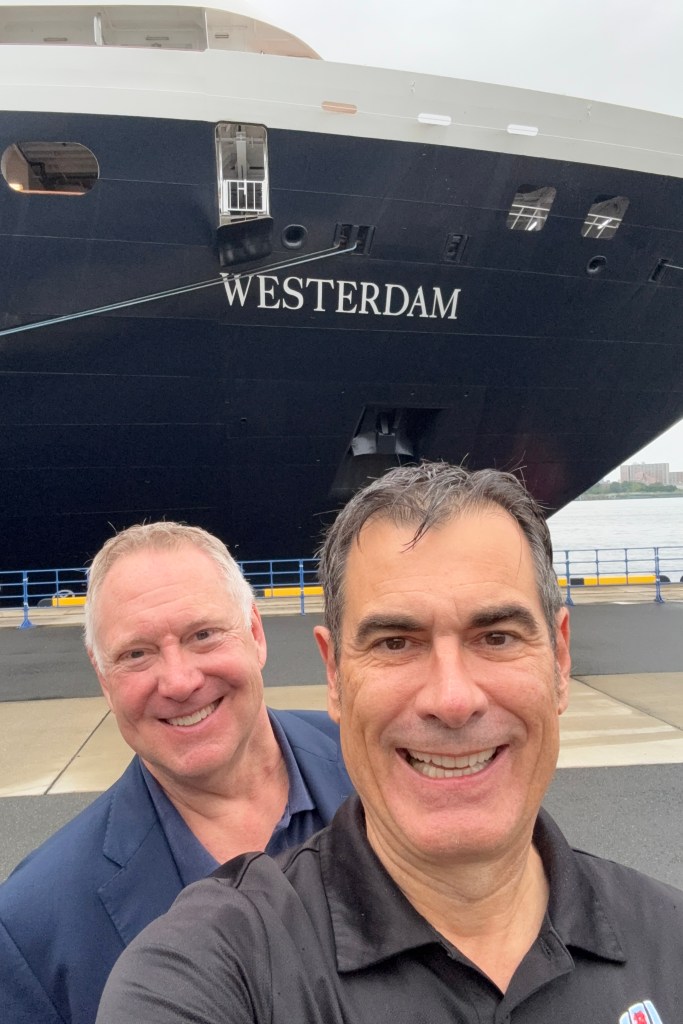
15 December 2025: Today, somewhere between the Pacific and memory, I am aboard ship – this time the lovely Seabourn Encore — talking once again about Titanic. Not about the iceberg — we’ve all heard that part — but about what followed: the moments when rockets flared into the night, radio operators reached for familiar signals, and ordinary people revealed who they were when certainty vanished.

Titanic didn’t simply sink. It exposed the fault lines between tradition and technology, between habit and clarity, between survival and conscience.

On the night of April 14, 1912, Titanic fired a series of rockets into the black North Atlantic sky. They rose cleanly and burst white, one after another, at regular intervals. Today, we assume distress signals must be red. In 1912, that assumption did not exist. White rockets were entirely acceptable under British maritime practice. Rockets were meant to attract attention, not convey color-coded meaning. Red rockets existed, but there was no international standard governing their use, and many ships — Titanic included — carried white rockets specifically designated for emergencies.

And the rockets worked. They were seen. However, they failed to deliver the needed message. A nearby ship, the Californian, watched those rockets climb into the night. Officers noted them carefully: eight white bursts, fired methodically, from a vessel that appeared stopped and strangely silent. Yet no decisive action followed. The wireless operator had gone off duty. The officers did not interpret white rockets as an unambiguous distress call. Captain Stanley Lord was informed, but reassured that the signals might be company communications or celebrations. There was no standing order that rockets alone required waking the wireless operator or steaming to assist. They saw the warning. Sadly, they failed to recognize its meaning.

Both the American and British inquiries would later conclude that Californian could — and should — have responded. Titanic’s rockets did not fail. Interpretation failed. Procedure failed. Urgency failed.

At the same moment those rockets were flaring, another transition was unfolding invisibly in the air: the language of distress itself.

For years, wireless operators trained by Marconi relied on a signal known as CQD. “CQ” meant “calling all stations.” The added “D” meant “distress.” It was not an international standard but a company convention — familiar, habitual, comfortable. By 1912, CQD was already becoming outdated, though many operators still used it by reflex.

The future belonged to SOS.

SOS did not stand for “Save Our Ship” or “Save Our Souls.” Those phrases came later, invented as mnemonic aids. SOS was chosen for one reason: its perfect simplicity in Morse code — three short signals, three long, three short. Symmetrical. Unmistakable. Nearly impossible to confuse, even through static. Iwas adopted as the official international distress signal in 1908. And yet, habits die hard.

When Titanic struck the iceberg, wireless operator Jack Phillips began transmitting CQD. His colleague, Harold Bride, reportedly joked, “Send SOS — it’s the new call, and this may be your last chance to send it.” Titanic sent both signals into the ether, straddling two eras at once: the old, company-based system and the emerging international standard.

This mattered. SOS was heard. Carpathia responded immediately. Rescue began because clarity finally broke through confusion. The failure was never the signal itself. It was the system surrounding it.

And then there are the stories that require no technology at all.

Isidor and Ida Straus were not celebrities aboard Titanic, though many recognized them. He was a German-born immigrant, a partner in Macy’s, a former congressman — a man who embodied the promise of American commerce. She was intelligent, resolute, and deeply devoted. Married for more than forty years, they were known for being rarely apart.

When the lifeboats were being loaded, Ida was offered a seat. Isidor was not. He refused to enter a boat before other men. Ida refused to leave him.

“We have lived together for many years,” she said. “Where you go, I go.”

She handed her fur coat to her maid and told her quietly that she would not be needing it. The Strausses were last seen sitting side by side on deck chairs, holding hands as the ship went down. They did not panic. They did not argue. They did not attempt to outwit fate. They chose fidelity over survival.

In the days after the disaster, Macy’s — so closely associated with Isidor Straus — publicly mourned. Like much else from Titanic, a belief has persisted that the store still hangs black crepe every year on the anniversary of the sinking. While the store did observe mourning in 1912, what endures is not a retail ritual but something far more fitting.

On Manhattan’s West Side, at Broadway and West End Avenue at 106th Street, there is a small, quiet space known as Straus Park. Established by the family in 1915, it is centered on a simple memorial fountain bearing words from the Book of Samuel:

“Lovely and pleasant were they in their lives, and in their death they were not divided.”

Isidor’s body was recovered and buried in New York. Ida’s was never found. Their names share a single memorial, as they shared a life.

More than a century later, Isidor Straus’s gold pocket watch — a gift from Ida decades earlier — resurfaced and sold at auction for £1.78 million ($ 2.3 million) reportedly stopping at 2:20 a.m., the moment Titanic disappeared beneath the sea. 

The violin owned and played that night by Wallace Hartley, Titanic’s band leader. When Hartley’s body was found later, floating in a life jacket, the violin was still strapped to his body.  It sold for £900,000 ($1.5 million) in 2013 and now rests at the Titanic Belfast Museum. Hartley lies buried in Colne, Lancashire, beneath a gravestone carved with a violin. 

Both these tangible relics from that “Night to Remember” are but the most record-breaking icons. There are hundreds of other artifacts from the world’s most famous ship that continue to pop up at auction, and in museums around the world. Since the discovery of the wreck in September 1985, and exploration of the site, more are brought, literally, to the surface.

This is why Titanic endures: not because of the story of the ship, although that is compelling, but because of these most human of moments and the changes the disaster made on history, and navigation. It’s stories like this that continue to fascinate me, and others, to this very day.

Happy Birthday Rainbow Honor Walk honoree Jose Sarria

Happy Birthday Rainbow Honor Walk honoree Jose Sarria

IMG

Today on the anniversary of his birth, we celebrate the life and legacy of Rainbow Honor Walk honoree José Sarria (December 13, 1922 – August 19, 2013).

A pioneering LGBTQ+ activist, drag performer, and political trailblazer, Sarria made history in 1961 as the first openly gay person to run for public office in the United States. Through his fearless visibility, community organizing, and founding of the Imperial Court System, he helped transform San Francisco into a center of queer resistance, pride, and liberation long before Stonewall.

Read historian Bill Lipsky’s tribute from the SF Bay Times at the link below:

LinerLore Lectures aboard “Seabourn Encore”

Image0

LinerLore Lectures aboard “Seabourn Encore”

Ahoy! Alfredo and I are comfortably ensconced aboard the elegant “Seabourn Encore”, our at-sea home for the next 18 days in exchange for our popular LinerLore maritime history presentations.  From the birth of oceanic travel to the Titanic, from the Golden Age of passenger liners to the explosion in cruising, there’s something for every salty soul to enjoy.

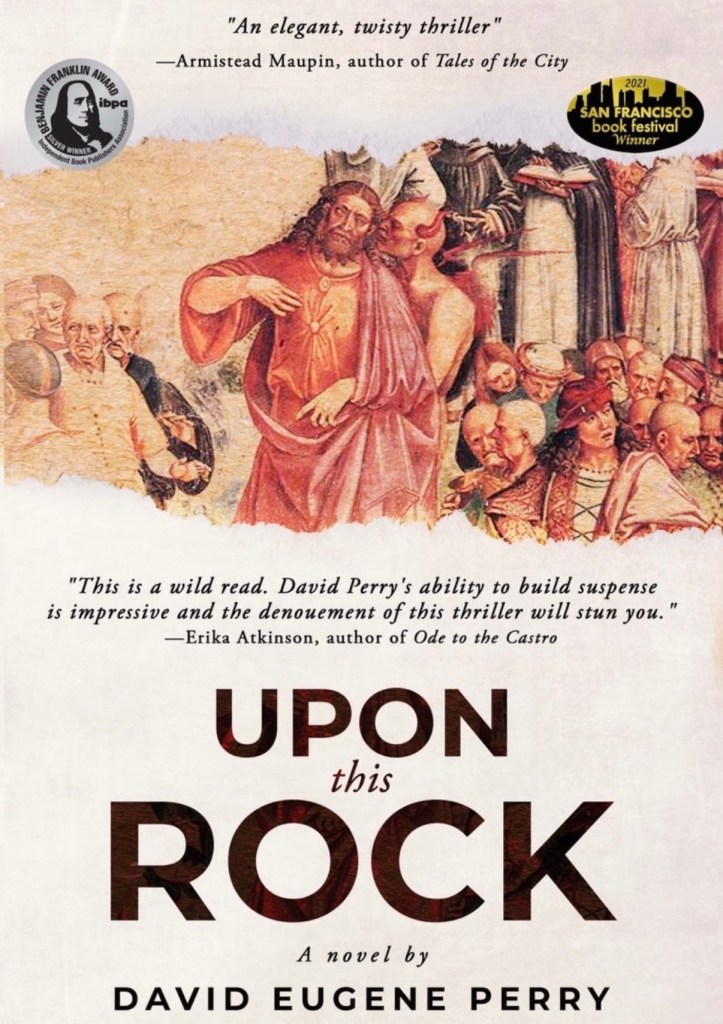
Plus, I’ll be working on the sequel to my bestselling award winning mystery, Upon This Rock.  Now in its second printing with its screenplay being shopped around Hollywood, “Rock” takes place in the magical Italian hilltop town of Orvieto.  Its sequel — Thorns of the 15 Roses — features a murder aboard a luxury cruise ship headed to Spain and the tiny Andalusian town of Grazalema.

Below, the schedule for the coming crossing from Panama City to Honolulu.

Ahoy, Aloha and Mahalo!

— David Eugene Perry

Titanic: Legend and Legacy


Without a doubt, the most famous ship – and shipwreck – in the world, RMS Titanic has lived longer in memory and ongoing fascination than her all-too-brief maiden voyage. Learn of the 1898 book that “predicted” her story (and loss), and take a tour through the dozens of movies, and hundreds of books that continue to bring this classic sea tale to new generations.

——————

Paddlewheels, Steam & Speed: 

The Birth of Oceanic Travel.
For millennia, humans have sought to bridge the “Old World” to the “New” over the “Western Ocean”. From St. Brendan to SS Great Britain from sail to steam, former ship office and award winning author David Eugene Perry chronicles the story of TransOceanic travel, Atlantic & Pacific.

——————

Ocean Olympians: Ships of State, Immigration & Sometimes War

From 1900 – 1914, millions of Europeans crossed the Atlantic: immigrants, business people and tourists. The competition among the ship owners of the US, Britain, France, Germany, Holland and others was intense, and changed the world leading up to World War I.

——————

Manuscripts, Movies & A Murder Mystery at Sea.

Best-selling author David Eugene Perry talks about his award-winning mystery thriller Upon This Rock set in the historic town of Orvieto, Italycurrently in screenplay developmentand shares a section of its sequel, including a murder on a cruise ship: Watch out!

———————-

The Golden Age of Liners: Blue Riband Royalty.

Queens Mary and Elizabeth, Rex, Normandie, Breman & Europa and SS United States. These fastest and most glamourous of liners defined an age, and a way of life, between the Wars, and after. A crowd pleasing “must sea” talk of the Sea!

——————

From Crossing to Cruising: A New Golden Age at Sea.

In the late 1950s, air travel surpassed passage by sea for crossing oceans. What to do with aging, elegant ships meant for passenger comfort but not competitive with jets? The answer: “Getting there is half the fun.” Learn how “crossing” gave way to “pleasure cruising” and what’s in store for the future.

——————

Linerlore: Classic Tales of the Sea and Famous Ship Stories.


Nothing is more evocative than “Tales of the Sea.” Learn about the Italian beauties Michelangelo & Raffaello, FDR’s presidential yacht Potomac, historic warships of the Pacific and even a few “unsolved” maritime mysteries!

——————

By Wave and Wing: Pacific Passenger Travel

From the great ships of Canadian Pacific, to Japan’s glamourous NYK liners, and finally by air during the brief glory age of the Pan Am Clippers, passage on (and over) the Pacific has inspired countless writers and wanderers to exotic climes. Also, we look into one of the Pacific’s most enduring mysteries: Amelia Earhart’s last flight.

IMG

“Titanic” Auction December 9 & 10

“Titanic” Auction December 9 & 10

Image1

The time has come! Bidding opens tomorrow for a one-of-kind irreplaceable piece of Hollywood maritime history: the First Class Staircase “Cherub” from James Cameron’s “Titanic” where Jack kissed Rose’s hand and other key scenes!  Don’t miss this once-in-a-lifetime opportunity from Heritage Auctions! Don’t miss this once-in-a-lifetime opportunity from Heritage Auctions on December 9 & 10. LOT #38496 – Download the Heritage Auctions app now — FREE — to follow the auction and/or bid.

Click now on the link below for info and to register for updates:

https://entertainment.ha.com/itm/movie-tv-memorabilia/props/titanic-tcf-1997-iconic-screen-used-grand-staircase-cherub-fixture-total-2-items-/a/7433-38496.s?ic4=GalleryView-ShortDescription-071515

December 8: Today in Upon This Rock

December 8: Today in Upon This Rock

Screenshot

December 8: Today in Upon This Rock, the elderly, elfish and enigmatic priest, Don Bello, shows Adriano & Lee his pastorate: the nearly 1000 year old church of San Giovanale, oldest in Orvieto, and central to the mystery surrounding the suicide of its young deacon, Andrea.

As the mystery unfolds during Christmas Season, it’s perfect for literary gift giving. Throughout the Holidays, I’ll be posting a location from the book — all well known by Alfredo and me from Orvieto — and its literal inspiration in the book.

Screenshot

My best-selling double award winning mystery thriller is now in its second printing with its screenplay being shopped around Hollywood (fingers crossed).

Get your copy today at the “Upon This Rock” link below or better yet, at your favorite independent bookstore like Best Bookstore in Union Square (San Francisco), Books, Inc or Fabulosa in SF’s Castro! — David Eugene Perry

“An elegant, twisty thriller.” — Armistead Maupin, “Tales of the City” author

“A richly atmospheric, genre-blending mystery that balances historical depth with modern intrigue.” — Kirkus Reviews

“The gay ‘Da Vinci Code’ but a lot better.” — best-selling author Fenton Johnson

“Upon This Rock is for those readers who love Italy and who love crime fiction. David Perry evokes the spirit of the ancient Italian town of Orvieto, in a 21st-century thriller that takes in several centuries of history.” ― Lucinda Hawksley, author of Dickens’s Artistic Daughter, Katey

WINNER: Independent Book Publishers Association (IBPA)
WINNER: San Francisco Book Festival

IMG

https://a.co/d/j8tHEP2